
Royal Commission Series: the Government’s response

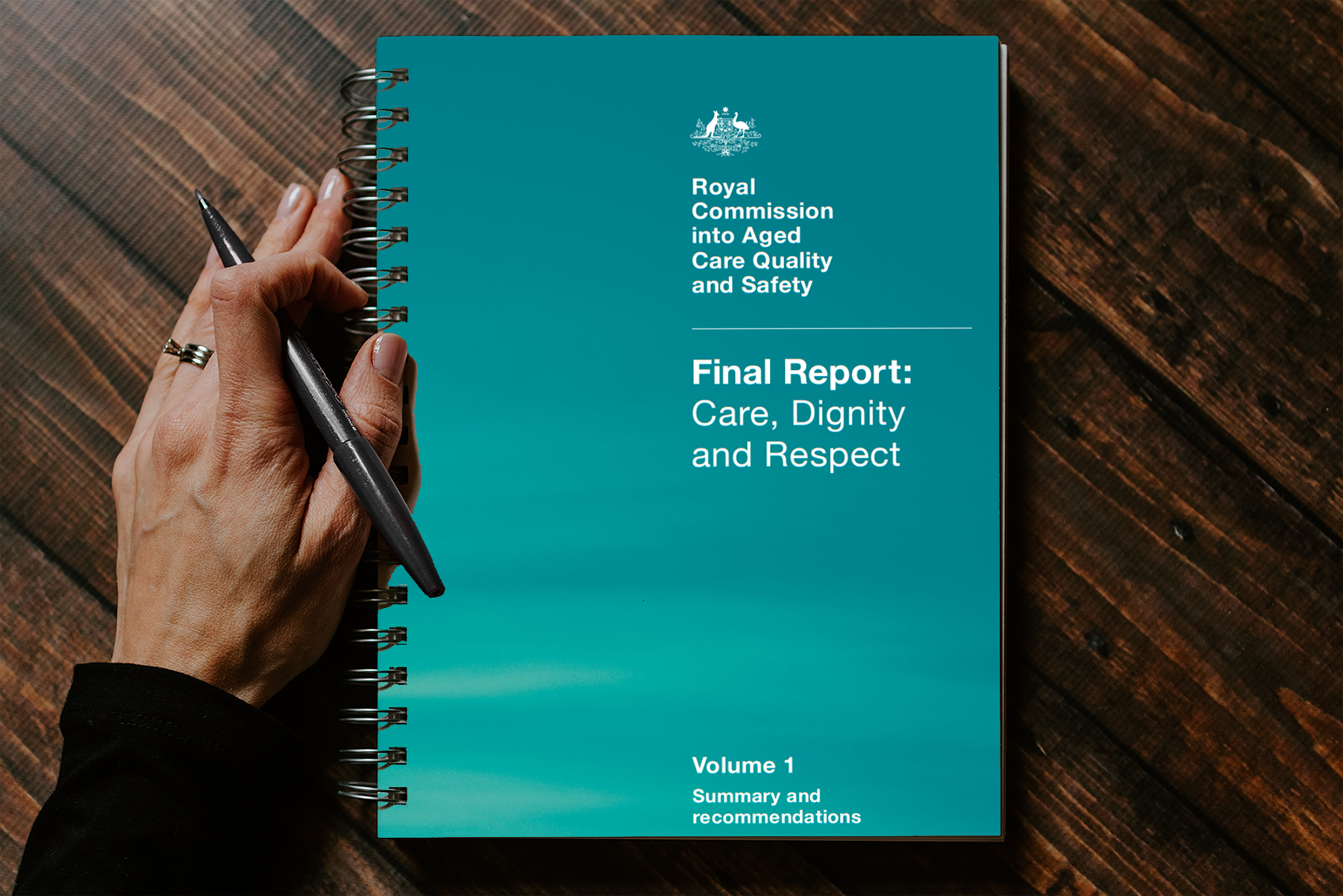
On the 11th of May, the Australian Government published its response to the final report of the Royal Commission into Aged Care Quality and Safety. The government accepted 126 of the 148 recommendations and rejected six of the recommendations, including the independent aged care commission model.

We’ve looked at a number of the key recommendations throughout this series and we will now provide an overview of the government’s response to those recommendations.

Dementia and palliative care - Recommendation 80: Accepted

The government has flagged dementia and palliative care as something that it will begin to address immediately. Starting this year, the government will target improvements to the quality of dementia care, including increased support when a person is first diagnosed, improved connection between services and an increase in the number of care minutes provided to people in residential aged care. Some of the government’s targeted funding includes:

  • $7.3 million to build dementia care capacity in residential aged care;
  • $67.5 million for the Dementia Behaviour Management Advisory Service and the Severe Behaviour Response Teams to reduce use of restraints; and
  • dementia training for an additional 1000 GPs and GP registrars per year.

The government’s review of the Aged Care Quality Standards will consider regulations that require:

  • providers to ensure that staff are appropriately trained in dementia and palliative care; and
  • that the Certificate III in Individual Support include units of study on dementia and palliative care.

For more information, see aged care – reforms to support people living with dementia and their carers.

Our previous blog post on dementia and palliative care outlines Recommendation 80.

Culturally safe service delivery – Recommendations 30 and 21: Accepted

The government has highlighted a number of initiatives targeting improved outcomes for the culturally safe delivery of services, including:

  • by 2023, the establishment of a network of 500 local Community Care Finders to engage with vulnerable Australians and provide face-to-face assistance to help them access aged care and other health and social supports;
  • increased funding for translating and interpreting services for diverse older Australians; and
  • the introduction of a specialisations verification framework and audit process by June 2022, to ensure that providers have demonstrated their capability to provide specialised services for people with diverse backgrounds.

We expect the government will consider the priority issues contained in recommendation 21, including potentially making mandatory the Aged Care Diversity Framework and underlying Action Plans, as part of their review of the Aged Care Quality Standards, to be completed by December 2022. 

For more information see: aged care – reforms to support people from diverse backgrounds

Our previous blog post on culturally safe delivery outlines Recommendation 30 and 21.

Aboriginal and Torres Strait Islander aged care – Recommendations 47, 48, 49, 50, 51: Accepted

The government will immediately begin addressing these recommendations, with the 2021-22 budget investing in targeted measures to improve the experience of Aboriginal and Torres Strait Islander people in aged care. In 2022, the government aims to establish a new workforce of 250 Indigenous people to provide face-to-face support for Aboriginal and Torres Strait Islander people to navigate and access care. Other reforms include upgrading existing buildings and constructing purpose-built residential facilities to connect people with communities on Country, improved access to translation and interpreting services and assistance to Indigenous organisations with governance, business training and leadership.

For more information see: aged care – reforms to support Aboriginal and Torres Strait Islander people and governance – more equitable access to aged care for First Nations people and special needs groups

Our previous blog post on Aboriginal and Torres Strait Islander care outlines Recommendations 47, 48, 49, 50 and 51.

Protection for whistleblowers – Recommendation 99: Accepted

The government has accepted this recommendation and referenced the new Aged Care Legislation Amendment (Serious Incident Response Scheme and Other Measures) Act 2021  which creates protections for providers, staff members, volunteers, family members, carers or representatives who make disclosures of information relating to reportable incidents. These changes came into effect on 1 April 2021.

Our previous blog post on whistleblowers outlines Recommendation 99.

New governance standard – Recommendation 90: Accepted

The government has outlined that it will introduce measures to strengthen the accountability of aged care providers including:

  • new governance obligations from 2022 requiring improvements to the composition and accountability of aged care boards;
  • a review of the Aged Care Quality Standards, focusing on areas of governance, dementia and food and nutrition (scheduled to be introduced in 2023); and
  • the appointment of an assistant commissioner for Sector Capability and Education to the Aged Care Quality and Safety Commission.

For more info see: governance – strengthening provider governance and governance – a new Aged Care Act

Our previous blog post on a new governance standard outlines Recommendation 90.

Restraints – Recommendations 17 and 65: Accepted

The government has indicated that strengthened legislative provisions to regulate restraints will commence from 1 July 2021. This will include clearer regulations on the use of restraint, clearer definitions of restraint and ensuring that restraint is only used as a last resort following deployment of alternative behaviour management strategies. The government has also indicated that it will appoint a Senior Practitioner to the Aged Care Quality and Safety Commission to lead education of aged care providers and General Practitioners in the use of restraints.

Additionally the government highlighted that the ACQSC, the Australian Commission on Safety and Quality in Health Care and the NDIS Quality and Safeguarding Commission are collaborating to align regulatory approaches to the use of restraints.

Our previous blog post on restraints outlines Recommendations 17 and 65.

Other areas of significance

Serious Incident Response Scheme (SIRS)

The government has outlined that $14 million will be spent on expanding the SIRS from residential aged care into home and community care from 1 July 2022. The government has also highlighted that dementia specialists will provide further training to representatives from all aged care providers on preventing the use of restraint.

Mandatory care time standards and reporting

From July 2021, providers will be required to report on care staffing minutes at the facility level as part of their annual reporting. From July 2022, providers will also be required to provide a monthly care statement to residents, outlining the care they have received and any significant changes. From December 2022, this information will inform a staffing star rating allowing clients to compare staffing levels between homes. The government is forecasting that by October 2023, providers will be required to meet a mandatory care time standard of 200 minutes per day for each resident.

Expanding the National Mandatory Quality Indicator Program

By July 2021, two new quality indicators relating to falls and fractures and medication management will be introduced alongside the existing domains of pressure injuries, physical restraint and unplanned weight loss. Additional quality indicators including indicators around quality of life in residential aged care and home care will be introduced by the end of 2022.

Subject to further consideration…

The news of the $18 billion to be invested in the aged care system has been welcomed by the sector, however there remain some significant areas that have been flagged by the government as subject to further consideration, or that have not been addressed in the government’s response:

  • the recommendation to increase supports to older people with disability to the equivalent level as a participant under the NDIS would receive;
  • a mandatory minimum qualification for personal care workers; and
  • the recommendation that by July 2024 the minimum staff standard should require at least one registered nurse on site at a residential aged care facility at all times.

It seems that the government will take a more moderate pathway to addressing these issues, or that it will consider the issues further before deciding to act.

We will be monitoring the changes closely and will be developing resources and tools to assist providers to meet any additional obligations under the changes.

Make sure to get in touch if you have any requests around resources, templates or self-assessments to assist you to meet your requirements. 

Sign up for a free trial

You can access all of our aged care resources in the SPP platform. 
Royal Commission Series: eliminating restraints

Welcome to the latest update in our series on the Final Report of the Royal Commission into Aged Care Quality and Safety.

Today’s focus is on the use of restraints, which the Royal Commission highlighted as an area of substandard care. The Royal Commission’s view is that providers should continually work towards the elimination of the use of restraints, and that compliance requirements should reinforce that view. The findings of the Royal Commission were clear:

 “The inappropriate use of unsafe and inhumane restrictive practices in residential aged care has continued, despite multiple reviews and reports highlighting the problem. It must stop now.”

The overuse of restrictive practices in aged care was found to be a major quality and safety issue. “Restrictive practices impact the liberty and dignity of people receiving aged care. Urgent reforms are necessary to protect older people from unnecessary, and potentially harmful, physical and chemical restraints.”

Restrictive practices can also fall under the category of abuse, when used improperly: “where [restrictive practices] occur without clear justification and clinical indication, we consider this to be abuse.”

Ultimately the misuse of restrictive practices is a human rights issue.

“Deficiencies in regulation of restrictive practices have been identified as a significant human rights issue in Australia. A strong and effective regulatory framework to control the use of restrictive practices should be implemented as a matter of priority. The Australian Law Reform Commission has recommended that there should be a nationally consistent approach to the regulation of restrictive practices.”

The Commission's recommendations

To address the above concerns, the Royal Commission made Recommendation 17: Regulation of restraints, which has now been accepted by the Australian Government in its response to the Final Report, which was published on 11 May 2021.

Recommendation 17 calls for the Quality of Care Principles 2014 (Cth) to be amended to ensure that restraints are prohibited unless:

  • the restraint has been approved by an independent expert assessment, or
  • the restraint is necessary in the case of an emergency to avert the risk of immediate physical harm.

If one of those conditions is met, the restraint should only be used:

  • as a last resort to prevent serious harm, after the provider has exhausted all other risk management alternatives;
  • to the extent necessary and in proportion to the risk of harm;
  • for the shortest time possible;
  • subject to monitoring and regular review (as stipulated in the behaviour support plan) by an approved health practitioner;
  • in accordance with relevant State and Territory laws;
  • with informed consent from the person receiving care or someone authorised by law to give consent on their behalf; and
  • in the case of chemical restraint, if prescribed by a doctor who has documented the purpose of the prescription.

Recommendation 17 also suggests that any use of restraints which is not prescribed by an assessment from an independent expert, should constitute a reportable incident under the updated Serious Incident Response Scheme.

Additionally, Recommendation 65: Restricted prescription of antipsychotics in residential aged care recommends that antipsychotic medication be prescribed only by a psychiatrist or a geriatrician, and that each prescription is reviewed at least annually.  The Government has accepted this recommendation in principle, and will refer the recommendation to the Pharmaceutical Benefits Advisory Committee, on whom it relies for advice in this area.

The above recommendations will make the compliance requirements of the use of restraints similar to those of the NDIS.

What should providers do now?

Providers should read Recommendations 17 and 65 in detail and review their current policies and procedures regarding their use of restraints with the recommendations in mind. Providers should ensure that each time restraint is considered, it is first:

  • Determined to be necessary to prevent immediate serious harm; or
  • Approved by an independent expert assessment.

If use of restraint is permitted due to one of the above circumstances, it must be:

  • Proportionate to the risk of harm;
  • Used after obtaining consent from the consumer and their representatives; and
  • Accurately documented.

Most importantly, providers should ensure that their processes continually aim to eliminate the need for the use of restraints.

Our resources

We have several resources to help providers stay ahead of the curve, including:

  • Policy: Eliminating Use of Restraints (Aged Care)
  • Template: Restraints Register (Aged Care)
  • Policy: Incident Management Procedures (Aged Care SIRS)

Our policy template for eliminating the use of restraints in aged care will help providers ensure that their assessment, worker training, and review processes are in line with best practice, and that they are working towards the elimination of all forms of restraint.

Regulated restrictive practices for children and young people

The NDIS Commission recently released a practice guide around restrictive practices for children and young people with disability. The guide is based on the requirements in the National Disability Insurance Scheme (Restrictive Practices and Behaviour Support) Rules 2018. The guide does not constitute any new requirements, rather it aims to clarify information about restrictive practices by guiding organisations through scenarios relating to children and restrictive practices. The guide outlines the obligations of providers under the NDIS Commission, as well as some good practice next steps.

The Commission highlights that approximately 48% of all NDIS participants are children. Despite this, children and young people are currently under-represented in the data reported to the Commission in relation to the use of restrictive practices. The Commission fears that the number of behaviour support plans lodged for children and young people is “not an accurate reflection of current practice in the sector” and that, instead, the use of restrictive practices with children is being overlooked, ignored or minimised.

The guide reinforces that providers who are supporting children both with and without a disability must have an understanding of the National Principles for Child Safe Organisations, and must be aware of their responsibilities in relation to child protection reporting. Refer to our previous blog post to see an overview of the National Principles as well as the child safe requirements for providers in each state or territory.  

Case-by-case basis

The guide highlights that the use of restrictive practices on a child or young person must be assessed on a case-by-case basis. Claiming “duty of care” doesn’t automatically omit a practice from being considered a restrictive practice. It is important to consider the context in which the practice is being used. Each case must be assessed to ensure that it is the least restrictive practice possible, and is proportionate to the potential risk of harm.

The Commission provides a tool to guide decision making around what constitutes a regulated restrictive practice for children and young people. 

Child-proofing

Child safety and injury prevention practices are essential to keeping children safe. These practices are referred to as “child-proofing”. Most of these child-proofing techniques are reasonable measures to ensure the safety of children. Crucial to these being reasonable is that they are age appropriate, in line with community standards and used irrespective of whether or not the child has a disability. If this is the case, these behaviours are generally not considered a restrictive practice and do not require reporting to the Commission. The need for these child-proofing techniques however, decreases with age, in accordance with the dignity of risk principle. Continuing to implement these practices with older children and young people may constitute a restrictive practice.

The guide provides a number of examples to outline when a child-proofing technique becomes a restrictive practice, some of which include:

Not a Restrictive Practice

  • Using a child gate to prevent a toddler from accessing the kitchen while the stove/oven is in use
  • Holding a child’s hand while crossing the road

Regulated Restrictive Practice

  • Using a child gate to prevent a young person from accessing the kitchen at all times (environmental restraint)
  • Using a two-person escort to prevent a young person’s movement during an outing (physical restraint)

Things to consider...

When a regulated restrictive practice is necessary, the NDIS Rules require registered providers to take all reasonable steps to consult with the child or young person. This must occur in an accessible format and ensuring that due consideration is given to the young person’s views. The provider should reflect on the following questions:

  • Is it the least restrictive option available?
  • Is it proportionate to the potential risk of harm?
  • Is the support being provided within a positive behaviour support framework which promotes the child’s development and their right to take reasonable risks?
  • Is it being used for the shortest time possible?
  • Is there a clear plan for reducing and eliminating the restrictive practice over time?

Restrictive practices and parenting practices

Towards the end of the guide, there is some helpful advice for support workers delivering support within a family home where the family uses restrictive practices. The resource emphasises that it is a support worker’s job to educate families around what constitutes a restrictive practice and its associated risks. In some circumstances, families may unintentionally use high-risk strategies in the absence of all relevant information and when they lack adequate support. Behaviour support practitioners play a role in educating parents and identifying less restrictive alternatives.

The guide also provides an outline (on page 22) of the reporting requirements in relation to restrictive practices. It clarifies that while families are not required to report to the NDIS Commission, NDIS behaviour support providers must report regulated restrictive practices in participants’ behaviour support plans even if the practice is only used by the family.

Resources

We have several resources that will guide you through the regulations around restrictive practices which you can find by searching for “restrictive” in the Reading Room.

  • Policy: Eliminating restrictive practices
  • Info: Eliminating restrictive practices
  • Template: Restrictive practice report

The NDIS Commission also released a regulated restrictive practices guide in late October last year which provides further clarity around the use of regulated restrictive practices in people with a disability.  

And don’t forget that separately, you can also access in SPP a self-assessment for the National Principles for Child Safe Organisations.

Sign up for a free trial

You can access our restrictive practice resources and many more in the SPP platform. 

Royal Commission Series: new governance standard

Over the past few weeks, we have been highlighting a number of the Royal Commission’s recommendations, as well as updating you on resources that can help you implement best practices.

Our focus today is on Recommendation 90: New governance standard.

The Royal Commission’s executive summary of its final report emphasised the need to ensure high standards of governance within aged care providers:

“Provider governance and management directly impact on all aspects of aged care. Deficiencies in the governance and leadership of some approved providers have resulted in shortfalls in the quality and safety of care.

“Governance arrangements provide for the systems by which an organisation is controlled and operates, and the mechanisms by which the organisation and its people are held to account. They are set by the leaders of an organisation, in particular the board or governing body. They are implemented by executive leaders and workers who report to those executive leaders. They involve everyone in an organisation.”

In the Royal Commission’s view, the existing governance requirements under the Aged Care Quality Standards “do not provide a sufficiently strong basis for the governance and leadership of aged care providers.”

The Commission's recommendations

Recommendation 90 sets out a proposal for more robust governance requirements to be introduced, to drive improvements to the aged care system.  Key components of the recommendation include requirements that providers:

  • Have governing body members who possess the appropriate mix of skills, experience and knowledge of governance responsibilities, to ensure the delivery of safe and high-quality care by the provider;
  • Have a care governance committee, to monitor and ensure accountability for the quality of all care provided;
  • Seek and receive regular feedback from consumers, their representatives and staff, on the quality and safety of the services they deliver, and ways in which the services could be improved;
  • Have an integrated complaints management system, including regular reporting to the governing body about complaints, any patterns, and underlying reasons for the complaints;
  • Have effective risk management practices in place covering care risks and also financial and other organisation risks;
  • Give particular consideration to ensuring continuity of care in the event of default by contractors or subcontractors; and
  • Have a governing body representative provide an annual attestation that the governing body has satisfied itself that the provider has structures, systems and processes in place to deliver safe and high-quality care.

How can BNG help?

SPP’s existing self-assessment for the Aged Care Quality Standards is an excellent way for providers to better understand the core components of a comprehensive approach to governance.

The self-assessment goes well beyond just listing the requirements of the standards.  It guides providers through the core approaches and processes they should implement in order to achieve best practice across their organisation, and in the area of governance it includes detailed, educative, best practice modules covering topics such as:

  • Organisational structure and accountabilities; governing body recruitment, induction and training; and reporting;
  • Clinical governance;
  • Risk management systems;
  • Financial controls and management; and
  • Performance monitoring and evaluation, and quality improvement.

It also includes modules on client and community feedback and complaints.

All of the modules include downloadable resources such as policy templates, to help providers develop their own policies and procedures.

Towards Best Practice: Clinical Governance self-assessment

We also have a separate self-assessment for Clinical Governance, which is based on guidance from the Aged Care Quality and Safety Commission. It addresses clinical governance at a more granular level and details the processes that should be in place for a clinical governance framework. The self-assessment outlines the roles and responsibilities of all individuals involved in care including the governing body, senior executive team, operational manager, the workforce, health practitioners and consumers.

Resources

We have many resources which will assist providers to implement a comprehensive approach to governance across their organisation, including a whole resource topic on “Governance and Management”.  You can find this section in the Reading Room under the heading “SPP Resources by Topic”.

You can also search for other resources using the search bar in the Reading Room. A number of our resources address Recommendation 90, including information sheets and policies covering:

  • Client Feedback;
  • Quality Management and Continuous Quality Improvement;
  • Complaints Management; and
  • Risk Management.

While the governance requirements are yet to be formally implemented, your organisation can get ahead by working through our self-assessments and implementing best practice policies and procedures across the organisation.  

To access these resources, and hundreds more, log in to SPP.

Sign up for a free trial

You can access these governance resources and many more in the SPP platform. 

Royal Commission Series: recommendation 99 calls for ‘protection for whistleblowers’

An issue highlighted by the recent Royal Commission into Aged Care Quality and Safety is the lack of systemic support for whistleblowers within the aged care system. In her overview of the Royal Commission’s Final Report: Care, Dignity and Respect, Commissioner Lynelle Briggs AO states:

It is a sad fact that many older people, their families and care workers are reluctant to speak up about the quality and safety of care because of the fear of reprisal from providers or their staff members”.

Current problems in the sector

Commissioner Briggs speaks of the need to make more transparent the complaints process and to strengthen whistleblower protections, using the following witness statement from Gwenda Darling, who gave evidence at the Brisbane Hearing, as an example:

After my first experience of having my service cut off by the provider after complaining, I’ve been a bit fearful that I could lose my package if I complain. The providers have a lot of power. I had to really fight hard to get my package reinstated. I felt hopeless and disempowered after that experience and it felt like there was no point raising issues or complaining.”

Similarly, an aged care nurse shared in a public submission to the Royal Commission that she had “learned over the years not to say anything for fear of repercussions from management”. Staff and consumers within an organisation may worry that they are in a vulnerable position, and therefore feel afraid to voice any concerns they have.

The Australian Medical Association submitted to the Royal Commission that legislated safeguards may help employees to speak up, which may “lead to earlier identification of concerns and to the improvement of services provided to older people in aged care”.

The Royal Commission, in its final report, ultimately recommends that a new Act be introduced, containing comprehensive whistleblower protections for all involved parties.

Recommendation 99 reads:

The new Act should contain comprehensive whistleblower protections for:

a)    a person receiving aged care, their family, carer, independent advocate or significant other

b)    an employee, officer, contractor, or member of the governing body of an approved provider

who makes a complaint or reports a suspected breach of the Quality Standards or another requirement of or under the Act.

What can providers do now?

Since the publication of the Royal Commission’s final report, the Aged Care Legislation Amendment (Serious Incident Response
Scheme and Other Measures) Act 2021
(Cth) has commenced. This legislation amends section 54 of the Aged Care Act 1997 (Cth), to add protections for disclosures of information related to reportable incidents.

Providers are advised to implement an internal whistleblowing policy in compliance with the Aged Care Legislation Amendment (Serious Incident Response Scheme and Other Measures) Act , which protects consumers, staff and families from reprisal when voicing concerns.

Such a policy should:

  • articulate protections for whistleblowers from criminal prosecution, administrative action or civil litigation, such as breach of employment contract or duty of confidentiality; and
  • formalise that staff or representatives of the provider will not be permitted to cause or threaten detriment to someone who has made or wishes to make a whistleblower disclosure.

Separately, providers should ensure their complaints management policies and processes are consumer-centred, and clearly state the protections in place for consumers, staff and family who seek to report concerns. There should be clear expectations that managerial staff will act ethically and will not target consumers, staff or family who make a complaint.

In addition, whistleblowing policies and procedures should comply with the Corporations Act 2001 (Cth), which contains certain protections for ‘eligible whistleblowers’. It is important that providers familiarise themselves with the Act, and are aware of their obligations under the Act. More information is available on the ASIC website.

Resources

We have a number of whistleblowing resources on SPP that can assist you to achieve best practice in this space.

  • Info: Whistleblower protection – This info sheet provides an introduction to the concept of whistleblowing and an overview of key rules under the legislation.
  • Policy: Whistleblower protection (public companies) – This is a policy most suitable for larger organisations who are obliged to comply with corporate whistleblowing laws, or for organisations who voluntarily follow the corporate regime.
  • Policy: Whistleblower protection (small organisations) – This is a simpler policy, which still covers key steps in the whistleblowing process. It is a more approachable resource for providers who are not currently required to implement a policy, but still wish to do so.

Sign up for a free trial

You can access these resources and many more in the SPP platform. 

Continuity of care – managing client transition to and from hospital

In 2020, the NDIS Quality & Safeguards Commission released a series of Provider Practice Alerts addressing key areas of risk for people with disability. This was in response to a scoping review into causes and contributions to deaths of people with disability, undertaken by Professor Julian Trollor, Chair of Intellectual Disability Mental Health at UNSW Sydney.

One of the key areas of risk identified was transitions of care between disability services and hospitals.

Australians with disability commonly access hospital services, with 22% being admitted to hospital and 26% having visited a hospital emergency department during 2015. Recent reports, including the review by Professor Trollor, have identified that mismanagement of transitions of care can lead to serious and life-threatening risks for people with disability. Areas of concern include management of medications, and lack of essential follow-up care after hospital discharge.

Improving transitions of care is key to improving medication safety and reducing avoidable harm. Safe transitions of care require clear communication and co-ordination between all relevant parties – the person with disability, their carers, healthcare, and disability support services. Clear communication helps ensure that critical information about a person’s health needs is passed on during transitions of care. 

How to support NDIS participants during transition to and from hospital

Prepare for planned hospital admission

Providers should undertake preparation in the lead up to a participant’s admission to hospital by ensuring the participant’s health record and medication information is up-to-date. Consider arranging a pre-admission meeting with hospital staff in order to co-ordinate the transition of care and inform hospital staff about the participant’s needs and capacities.  

Information to provide to hospital staff

If you have responsibility for a participant’s medical records and care, or have consent from participants, guardians or carers to share information, ensure you provide key medical information for the participant to hospital staff on admission.

Provide support during emergency admission

For an emergency visit to hospital, it may be necessary to arrange for a disability support worker, who is familiar to the participant, to stay with them during the admission.

Support when the participant leaves hospital

  • Plan for discharge – In consultation with health professionals, plan for the participant’s discharge from hospital as early as possible. This discharge plan should include details include date of transfer, referral services, and re-assessing support risks.
  • Understand participant’s ongoing needs and assess your capacity to meet them – work with hospital staff to understand the participant’s continuing needs post-discharge. This will include obtaining a transfer of care summary, care plan and medications summary.
  • Provide the participant with information about their follow-up care – it is important for participants to remained informed and empowered to contribute to decision-making throughout the transition process. Communication should take place in a format appropriate to the participant’s needs. 

Resources

Additional guidance, as well as more thorough detailing of these processes, is available in our resource, ‘Policy: Client Transition to and from Hospital’. You can find this resource in the SPP Reading Room, by searching for “transition”. We encourage you to make use of this template to guide your organisation in adopting best practice for client transitions of care. 

An important area for aged care

Client transition to and from hospital has also been highlighted as an important issue in aged care. Recommendation 66 of the recently released Final Report of the Royal Commission into Aged Care Quality and Safety called for improved transition between residential aged care and hospital care. Specifically, it recommended that discharge from hospital should only occur once clinical handover and discharge summary has been provided to the residential care service and the person being discharged. It also recommended that, when calling an ambulance for a resident, staff of aged care services should provide paramedics with an up-to-date summary of the resident’s health status. This should include medications and advance care directives.

We have integrated these recommendations, into our Client Transition to and from Hospital Policy, so this resource is appropriate for use by both disability support services and aged care providers.

Access key disability resources

Find a collection of helpful resources, tailored for NDIS providers, on the SPP platform. 

Royal Commission Series: Aboriginal and Torres Strait Islander aged care

Welcome to our third update on some of the recommendations contained in the Final Report of the Royal Commission into Aged Care Quality and Safety. Today’s update will highlight the Royal Commission’s specific concerns related to culturally safe aged care for Aboriginal and Torres Strait Islander people.

The Final Report’s Executive Summary states that Aboriginal and Torres Strait Islander people do not currently consistently receive culturally safe services, and this is an area that requires focus:

Aboriginal and Torres Strait Islander people who require aged care should be embraced by an aged care system that shows respect for their cultures and heritage.

The current aged care system does not ensure culturally safe care for Aboriginal and Torres Strait Islander people. Unless things change, it will be unable to meet the growth in demand that will accompany the increase in the eligible population.

Recommendations 47, 48, 49, 50 and 51 all focus on prioritising the delivery of culturally safe care to Aboriginal and Torres Strait Islander people who require aged care. Key themes include:

  • Maximising their ongoing connection to community and country, through the delivery of services at the regional and local level wherever possible, and by workers who are trained in culturally respectful, safe and trauma-informed care;
  • Seeking closer engagement and levels of trust between care providers and local Aboriginal and Torres Straits Islander communities;
  • Ensuring accessibility to needs-based, tailored and flexible aged care for Aboriginal and Torres Strait Islander people
  • Prioritising Aboriginal and Torres Strait Islander organisations as aged care providers; and
  • Increasing the training and employment of Aboriginal and Torres Strait Islander people in aged care services roles.

Maintaining connection with community and country was highlighted as an area of importance for Aboriginal and Torres Strait Islander aged care consumers. The final report recommended that consumers be supported to maintain their connections through travel, engagement with community and, where possible, receiving services on country.

Trauma-Informed Care for Aboriginal and Torres Strait Islander People

In addition to the MHCC’s Trauma-informed Care and Practice Organisational Toolkit (TICPOT) that we mentioned in our last post, they also offer a course developed and delivered by Aboriginal people for workers who support Aboriginal people impacted by trauma.

The Healing Foundation

Providers may also wish to consider some of the specialised resources on the Healing Foundation’s website. The Healing Foundation “is a national Aboriginal and Torres Strait Islander organisation that partners with communities to address the ongoing trauma caused by actions like the forced removal of children from their families.”

In particular, take a look at their fact sheet on providing effective aged care services to Stolen Generations survivors. It is an excellent resource to help providers and their staff understand the trauma and challenges lived by Aboriginal and Torres Strait Islander people, and how to provide them with care which is sensitive to their needs.

Along with the fact sheet, the Healing Foundation has also published a helpful two-page summary action plan to help providers ensure their services meet the needs of Aboriginal and Torres Strait Islander people.

Diversity Action Plan

To help you consider the issues raised in the Royal Commission’s recommendations, a great place to start is the Diversity Action Plan: Older Aboriginal and Torres Strait Islander People self-assessment in SPP. The self-assessment will help you to ensure your processes are aligned with best practice, and give you a means by which to benchmark your progress against three levels of actions: Foundational, Next Steps and Leading the Way.

For more background on the Department of Health’s Diversity Action Plans, take a look at our earlier post.

Inclusive Service Standards

As we noted in our last post, another helpful SPP self-assessment for aged care providers is for the Inclusive Service Standards. Developed by the Centre for Cultural Diversity in Ageing, the Inclusive Service Standards are a helpful resource for ensuring that your services are individualised, and that culturally safe service delivery is embedded in the governance of your organisation.

Spotlight on the FIA Code

The Fundraising Institute Australia (FIA) Code is a voluntary code, aiming to raise standards of conduct across the fundraising sector in Australia. It goes beyond mandatory government regulation, to encourage best practice fundraising for charities and not-for-profits. 

The FIA Code provides guidance to fundraisers on the following key areas:

  • Compliance – The FIA Code reaffirms that members must comply with all laws and regulations applicable to fundraising. It imposes compliance requirements for board members, training requirements, and the obligation to accept the decision of the Code Authority in respect of any complaint made under the Code.
  • Ethical conduct – Members must act honestly and with respect for the causes, donors and beneficiaries they represent. They must value privacy, trust and integrity, and be open about the nature of the work they do.
  • Conduct towards Donors  – Members have a number of obligations in relation to donors. These relate to complying with donors’ reasonable requests, providing opt-out information,  transparency around the cause for the fundraising and use of funds, protecting donor information, refusing donations that are inappropriate for a number of reasons, refraining from unduly influencing or harassing donors, and ensuring the veracity and high ethical standard of promotional materials.
  • Conduct towards Beneficiaries – Members must not engage in conduct that is disparaging towards a beneficiary, or that threatens their dignity. These requirements centre around upholding respect for beneficiaries in promotional materials and in use of language.
  • Conduct in Supplier relationships – Members must have written contracts with parties in their supply chain, specifying the responsibilities of all parties. It is a member’s obligation to ensure that all relevant parties are aware of the member’s obligations under the Code, and that they do not act in a way that could breach the member’s obligations. Members must also ensure supplier costs incurred in fundraising represent fair market value. 
  • Administration and enforcement – While the Code is voluntary, members agree that compliance with the Code will be monitored by the Code Authority, and alleged breaches will be referred to the Code Authority.

FIA has published a series of Practice Notes, which should be read in conjunction with the FIA Code. The Practice Notes cover specific areas and are designed to assist organisations with their implementation of the Code. Access to the Practice Notes is available here.

Our Standards & Performance Pathways (SPP) platform hosts a self-assessment for the FIA Code, accessible to existing FIA members. Using the platform, you can work through a series of user-friendly assessments to track your organisation’s compliance with the Code. It is a convenient way to highlight what you’re doing well, and also identify areas for improvement.

What's new for the Code?

FIA has recently released a new Practice Note on Fundraising and National Disasters. This resource addresses the topical area of national disasters, which can be natural, man-made or otherwise, and for which proceeds of donations can be contentious and challenging.  Fundraising bodies should place donors at the centre of any fundraising interaction.

The Practice Note guides organisations in their responsibility to be transparent about the charitable cause and how donated funds will be used, so that donors can make informed decisions at heightened emotional times, including during national disasters. It is important that donors understand who the beneficiaries of donations will be, and the different ways funds will be used.

FIA will also be releasing a further three new Practice Notes later in 2021, so keep your eyes peeled for those.

Upcoming webinar

BNG and the Fundraising Institute of Australia will be co-hosting a webinar at 3pm AEST on Wednesday 5th May to walk you through the FIA Code as well as the corresponding self-assessment in SPP.

Royal Commission Series: culturally safe service delivery

Welcome to our second update on some of the recommendations contained in the Final Report  of the Royal Commission into Aged Care Quality and Safety.

Today we focus on the Royal Commission’s concern that there needs to be better cultural safety for every older person within the aged care system.  We’ve highlighted a couple of important themes in the following extracts from the Executive Summary of the Final Report:

“Across the aged care system, staff are often poorly trained in culturally safe practices, with little understanding of the additional needs of people from diverse backgrounds.

“To deliver high quality and safe care, those providing services must respect the diverse backgrounds and life experiences of every older person, and tailor the delivery of care to meet their needs. Diversity should be core business in aged care

“Cultural safety must be embedded throughout aged care—from initial contact with the system, during assessment, and when an older person receives aged care services at home, in their community or in a residential setting. The pressing need for trauma-informed care is also relevant to cultural safety.”

Diversity and Cultural Safety

To address the above concern, the Royal Commission made Recommendation 30: Designing for diversity, difference, complexity, individuality.  This recommendation includes a requirement that “as a condition of approval or continued approval of providers, training on cultural safety and trauma-informed service delivery be provided for all workers engaged by providers who are involved in direct contact with people seeking or receiving services in the aged care system.”

See also Recommendation 21: Priority issues for periodic review of the Aged Care Quality Standards, which includes a recommendation to consider, by 1 July 2022, making mandatory the Aged Care Diversity Framework and underlying Diversity Action Plans – as well as having them better reflected in a revision of the Standards.

Aged Care Diversity Framework

Launched in 2017, the Aged Care Diversity Framework and Diversity Action Plans are designed to guide providers through the challenges of providing aged care services to people of all backgrounds and life experiences. There are four Action Plans in total:

  • Diversity Action Plan: All Diverse Older People;
  • Diversity Action Plan: LGBTI Elders;
  • Diversity Action Plan: Older Aboriginal and Torres Strait Islander People; and
  • Diversity Action Plan: Older CALD people.

The Action Plans are based on a progression scoring model, requiring providers to reflect on the level of quality at which they deliver services to diverse older people.

To date, the Diversity Action Plans have not been broadly publicised or implemented in detail by providers.  However, about a year ago we added self-assessments in SPP for each of the four Diversity Action Plans, to help providers understand, implement and monitor the actions they can take to tailor a more inclusive service for all older persons.  These self-assessments can be found on the Standards tab in SPP, under Aged Care Diversity Framework.

Inclusive Service Standards

In addition to the Aged Care Diversity Framework, we added the Inclusive Service Standards to the platform in 2019.  Developed by the Centre for Cultural Diversity in Ageing, the Inclusive Service Standards were designed to “assist aged care providers in the development and delivery of inclusive services to all consumers”. The standards will help providers ensure that the services they deliver are culturally safe, and reflect the cultural needs of the target group. Click here to read more about the Inclusive Service Standards in SPP.

Trauma-Informed Care

The Final Report has emphasised the importance of trauma-informed service delivery across the aged care system.  The Mental Health Coordinating Council (MHCC) defines Trauma-informed Care and Practice (TICP) as “a strengths-based framework that emphasises physical and psychological safety, creating opportunities for people with lived experience to rebuild a sense of control and empowerment.

We plan to develop some additional resources to help providers align their processes with the recommendations of the Royal Commission. However in the meantime, you may wish to consider some of the excellent resources available on MHCC’s Online Learning hub, including several courses related to trauma-informed service delivery.

In addition, take a look at MHCC’s Trauma-informed Care and Practice Organisational Toolkit (TICPOT), which is a comprehensive roadmap, with resources and tools, to build and strengthen trauma-informed service delivery.

Culturally Safe Aged Care for Aboriginal and Torres Strait Islander people

The Royal Commission has also made a number of recommendations to address its particular concern that Aboriginal and Torres Strait Islander people do not currently receive services that are consistently culturally safe.

Our next post will consider these recommendations in detail, and highlight a number of resources and tools available to providers.

Sign up for a free trial

You can access these resources and many more in the SPP platform.