How an effective call bell system can improve service provision 

An effective call bell system is a key part of safe and quality care delivery in facilities providing services to care recipients. It can play an important role in risk mitigation, staff management and ongoing continuous improvement processes, and also helps demonstrate to your care recipients your organisation’s commitment to safe and high quality services.  

Promptly responding to call bell requests from care recipients can aid in risk management and the prevention of issues such as falls or pressure injuries. Long or delayed response times for call bells can be a sign of policy or procedure issues relating to the staff model or communication. Monitoring call bell response times and the reasons for the calls can contribute to identifying opportunities to improve service delivery.

It’s therefore vital for organisations to have processes and procedures in place to provide this assistance for their care recipients.  

1. Staff management

One of the most important aspects of a call bell system is the provider’s ability to respond to requests in a timely way. To achieve this, facilities must manage their staffing and rostering to support their staff’s ability to respond to call bells. Failure to roster enough staff, overburdening staff with too many responsibilities, and a lack of communication around expected responsibilities, priorities and processes are all common explanations for high call bell response times. 

2. Standards compliance

While you won’t find call bells specifically mentioned in standards requirements, there’s a lot of indicators that can be supported by good call bell response practices. For example, in a number of Provider Performance Reports, the Aged Care Quality and Safety Commission has referred to call bell response times and reporting as relevant to its assessment of compliance by providers with: 

  • Standard 3(3)(b)Effective management of high-impact or high-prevalence risks associated with the care of each consumer; 
  • Standard 7(3)(a)The workforce is planned to enable, and the number and mix of members of the workforce deployed enables, the delivery and management of safe and quality care and services; and 
  • Standard 8(3)(d) – Effective risk management systems and practices 

As another example, for care facilities following NSQHS, call bell system management and reporting is relevant in relation to the Clinical Governance Standard and the Comprehensive Care Standard 

3. Quality improvement

Reviewing call bell response records can form an important part of an organisation’s continuous quality improvement processes. Accurate records of the reasons for each call bell use, as well as response times, are useful for verifying care recipient and staff feedback and/or complaints and highlighting where improvements can be made in service procedures. Commonly listed reasons for response times outside the target window indicate opportunities for organisations to review current processes and how they impact safe and quality service delivery. 

How SPP can help

We’ve developed a new policy template for providers with call bell systems to optimise their call bell procedures. The template will help providers set response time KPIs, clarify staff responsibilities, and put in place regular reporting and analysis.  

In addition, our SPP self-assessment platform allows providers to link their call bell records as evidence against relevant Standards. 

We're here to help.

Need help with your call bell procedures? Ask us about a free trial of SPP.

The new high intensity support skills descriptors

High Intensity Daily Personal Activities are the highest risk, and most personal in nature, of all supports delivered under the NDIS. To uphold the wellbeing of participants, providers who support participants with high intensity daily personal activities must ensure that workers who are not qualified health professionals have the necessary skills and knowledge to safely provide these supports.

In December 2022, the NDIS Quality and Safeguards Commission (the Commission) released revised skills descriptors for High Intensity Daily Personal Activities, outlining the skills and knowledge workers must have to deliver High Intensity Daily Personal Activities supports.

There are currently eight high intensity supports:

  • Complex Bowel Care;
  • Enteral Feeding Support;
  • Dysphagia Support;
  • Ventilator Support;
  • Tracheostomy Support;
  • Urinary Catheter Support;
  • Subcutaneous Injections; and
  • Complex Wound Care Support.

The revised skills descriptors

Each of the High Intensity Daily Personal Activities is supported by its own unique set of skills descriptors. The Commission’s document also lays out the context, scope and necessary training for each of the above supports.

Following the contextual information, the updated skills descriptors outline the behaviours which demonstrate the skills and knowledge each worker should possess. The skills and knowledge are divided into three segments representing a participant’s care journey: preparing to deliver supports, implementing the support plan, and reviewing the support.

Regulatory context

The revised skills descriptors provide more detailed guidance about the expectations of workers, and align with the requirements in Module 1 of the Practice Standards.

If your organisation provides High Intensity Daily Personal Activities supports, auditors may use the skills descriptors as guidance when performing a quality audit.

Who are the skills descriptors for?

The Commission has developed the skills descriptors for use by participants, auditors, providers, workers and trainers. For participants, they are useful for understanding the standard of care expected by the Commission, and using this information to assess their provider’s performance. For providers, workers and trainers the skills descriptors provide a standard by which skills and knowledge can be benchmarked.

How we can help

Following the release of the revised skills descriptors, we have developed a new self-assessment which providers can use to evaluate whether their workers have the adequate skills and knowledge to deliver High Intensity Daily Personal Activities supports. We’ve also updated our policy template to help providers ensure that their processes are aligned with the expectations of the skills descriptors.

Need compliance help?

Want to know more about the high intensity support skills descriptors? Take out an SPP trial!

What’s New in Medication Management?

A growing number of Australians are remaining at home as they age rather than living in residential aged care facilities.  Many are moving into facilities at an older age, or when they develop conditions requiring greater care. In addition, the rise of polypharmacy (the use of multiple medicines by one person) and chronic disease raises increased challenges for medication management. In 2019, the Council of Australian Governments Health Council announced the Quality Use of Medicines and Medicines Safety as Australia’s 10th National Health Priority, in recognition of the increased risks of harm relating to the use of medicines.

The Department of Health and Aged Care has recently updated its Guiding Principles in response to this National Health Priority and the societal changes relating to medication management, with three Quality Use of Medicines (QUM) resources. These guidelines are not prescriptive, but demonstrate best practice for providers when managing consumer medications. They ensure consistency of care across the spectrum of care settings, with broadly standardised expectations of healthcare providers in medication management.  

Each set of guiding principles includes some overarching general principles, which inform the implementation of the specific remaining principles. They are designed to be used in conjunction with relevant legislative, profession-specific and accreditation requirements, and affirm a patient-centred, whole-of-organisation approach to care, as well as strong clinical governance. 

All three QUM documents are now consistent with other standards, such as the Aged Care Quality Standards, as well as aligning with each other for a cohesive approach to medication management.  

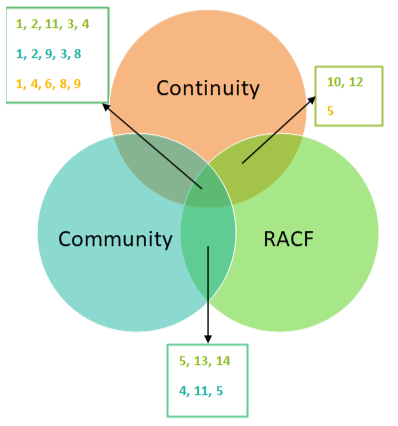
For example, Guiding Principle 1 (Person-centred care) is common to both the RACF and Community principles, and connects to Guiding Principle 8 (Sharing decision making and information about medicines with the individual receiving care) of Continuity in Medication Management. The diagram to the left shows where principles in the three documents overlap. For more information about the areas of commonality and differences between the three guiding principles, take a look at this guide from the Department of Health. 

1. Guiding Principles for Medication Management in Residential Aged Care Facilities (RACFs)

These Guiding Principles build on the 2012 RACF Medication Management principles, with the addition of two leading principles, Person-centred care and Communicating about medicines. Both align the Guiding Principles with Standard 1 (Consumer dignity and choice) of the Aged Care Quality Standards, and aim to actively engage consumers with their care. Other existing principles have been reorganised, combined, and renamed for greater consistency with the broader network of safety and quality standards. 

2. Guiding Principles for Medication Management in the Community

The Community Medication Management guiding principles have evolved from their 2006 predecessor and, similar to the RACF principles, have new principles relating to person-centred care and communication, to promote a person-centred partnership and systems-based approach when support is being provided to people living at home. The previous guiding principles have also been adjusted to match the wording of the RACF guiding principles, where they share common best practice. 

3. Guiding Principles to Achieve Continuity in Medication Management

Finally, the 2005 Continuity in Medication Management guiding principles have been updated to reflect current priorities and best practices relating to consistent, safe, and quality care across healthcare providers and at transition of care, including the addition of a Safety and quality systems principle.

BNG and Medication Management

We’ve updated our Medication Management policy document to reflect some of the key changes in the new Guiding Principles documents, available now in the Reading Room. In addition, we also have a range of templates that can be used as a starting point for your organisation to develop a comprehensive approach to medication management that:  

  • best suits the needs of your clients and the services you provide, and  
  • ensures your service delivery is in line with current best practice.  

Looking for more information?

The Australian Government Department of Health and Aged Care has created fact sheets for each new set of Guiding Principles, explaining each principle and some key tasks for achieving them: 

Medication management needs work?

Sign up for a trial of SPP to see how our resources can help you improve your service delivery.

NSQHS Accreditation Assessments for HSOs: What’s Changing? 

From July 2023, the National Safety and Quality Health Service (NSQHS) Standards assessment procedure for accreditation of hospitals or day procedure services (Health Service Organisations, or HSOs) will be changing, with mandatory short notice accreditation assessments replacing the existing announced and voluntary assessments.  

Why the change?

The move to short notice assessments is intended by the Australian Commission on Safety and Quality in Health Care (the Commission) to support the continuous implementation of the NSQHS Standards and reduce the administrative burden of preparing for accreditation assessment”.

The new process is designed to move the focus of assessments from preparation for assessment, to assessment of day-to-day practice. It is intended to support and emphasise continuous self-assessment by HSOs of their compliance with the NSQHS Standards, as well as their implementation of continuous quality improvement strategies.

The Commission requires that HSOs have systems and processes in place to keep their self-assessment documentation up to date, and conduct reviews of their self-assessment and their compliance status at least every three months.  

When will we be assessed?

Short notice accreditation assessments will occur: 

  • at least once within each three-year accreditation cycle;  
  • at least 4 months before the HSO’s accreditation expires;   
  • no sooner than 6 months after the previous assessment; and 
  • within 4 years of the previous assessment. 

HSOs therefore need to be ready for an accreditation assessment at any time. HSOs may request up to 20 business days per accreditation cycle to be excluded from assessment. These are days where a short notice assessment would either directly impact the provision of the service to consumers or the consumers of the service would be unavailable.

When will we be given notice of an upcoming assessment?

The notice period for an upcoming assessment will differ depending on the HSO’s location and/or the specific services provided. 

  • If you are an HSO in a metropolitan, rural or regional area with public transport options, you will be given 24 hours’ notice of assessment. 
  • If you are an HSO in a rural or remote area with either no or restricted public transport options, you will be given 48 hours’ notice of assessment.  

For some HSOs where special permissions must be sought to conduct assessment, such as services in some Aboriginal communities, fly-in fly-out services or services operating in prisons, your assessment notice may be up to 4 weeks to accommodate these requirements. 

For more information, see the Commission’s fact sheet, or feel free to contact us if you have any questions about the new assessment changes.

The importance of active, continuous self-assessment

Regular self-assessment of your compliance with the NSQHS Standards will maintain a focus on identifying opportunities to improve your service delivery. It forms an important step in the cycle of active, continuous quality improvement. As well as tracking compliance with each standard, your self-assessment process should also incorporate improvement opportunities that you identify through consumers’ feedback and complaints, and also from any incidents or near misses that occur. 

Ideally, your streamlined self-assessment system should include: 

  • A chronological record of all the compliance gaps and improvement opportunities you identify, and when you’ve addressed them; 
  • The ability to collaborate on and track improvements, including by assigning responsibility for certain tasks to team members;  
  • A compliance status report that you can generate at any point in time; and 
  • The ability to store and link documentary evidence of your compliance with each standard (for example, relevant policies and procedures that are implemented across your organisation).

How SPP can help

Our NSQHS self-assessment modules allow providers to understand the requirements of the Standards in detail, collate all identified improvement opportunities through an individually curated action plan, and review and report on their compliance status at any time.   

They also provide a helpful way to link relevant evidence against each standard, streamlining the self-assessment process and ensuring that your evidence of compliance is kept up to date. 

SPP also has self-assessments for other standards within the National Safety and Quality family, including for: 

  • Digital Mental Health,  
  • Mental Health for Community Managed Organisations, and  
  • Primary and Community Healthcare. 

In addition, SPP provides a deep pool of resources in our Reading Room (such as policy templates and info sheets) covering all aspects of organisational good governance to help HSOs work towards best practice.  

You can find our NSQHS Standards self-assessments in SPP by searching for ‘NSQHS’ in the Standards tab or under the ‘Australian National Standards’ subheading in that same tab. 

Looking for NSQHS resources?

Sign up for a free trial of SPP.

Understanding voluntary assisted dying legislation and what it means for your service

Voluntary assisted dying (VAD) is a sensitive and complex topic, and one that is gaining increasing attention in Australia. VAD laws have been passed in all Australian states, and are currently operating in Victoria, Western Australia, Tasmania, Queensland (as of 1 January 2023), and South Australia (as of 31 January 2023). VAD laws will commence in New South Wales on 28 November 2023. The recent repeal of legislation which previously barred the territories from making laws on assisted dying, means that the Northern Territory and the Australian Capital Territory will also be able to legislate on VAD in the future.

When is VAD available?

VAD is available in limited circumstances, and allows eligible individuals with a terminal illness, disease or medical condition to end their lives with the assistance of a health practitioner. This assistance can take the form of self-administration, where the individual takes the medication themselves, or practitioner administration, where the medication is administered by a health practitioner. Importantly, VAD is only available to individuals who have decision-making capacity and who are acting voluntarily without coercion.

Eligibility

The eligibility criteria for VAD vary between states, but generally require that individuals be over 18 years of age, be an Australian citizen or permanent resident, and have been resident in the state for at least 12 months. They must have a terminal illness or medical condition that is expected to cause death within a certain time frame (usually six months), and be experiencing suffering that cannot be relieved in a manner that the individual finds tolerable.

Process

The process for accessing VAD also varies between states, but generally requires the individual to make multiple requests for VAD and undergo assessments by at least two independent medical practitioners. The individual can withdraw their request at any time.

What does VAD mean for providers?

As aged care and health providers, it is important to understand the laws surrounding VAD and to be able to support individuals and their families who may be considering this option. Providing appropriate pain and symptom relief is a crucial part of end-of-life care, and is not considered VAD. It is important to differentiate between providing pain relief and VAD, and to be aware of the legal implications of each.

Voluntary assisted dying is legislated at the state level, so specific rules vary between jurisdictions. With respect to the rights and responsibilities of residential aged facilities, there are some common themes across Australian states.

In all states, health care facilities such as residential aged care facilities can decide whether to provide VAD, and what support they will provide to residents seeking VAD. However, in a number of states such as South Australia, Queensland and New South Wales, even if a facility chooses not to provide VAD, it will still have to meet certain minimum requirements in relation to residents seeking VAD.

These obligations include not hindering access to information about VAD for residents at the facility, and allowing reasonable access to the facility by a medical practitioner who can assist a resident with VAD requests and assessments.

The act of discussing VAD with individuals is also regulated in all states, and providers should be aware of laws which prohibit health workers from volunteering information about VAD before a resident raises the topic unprompted. 

SPP Resources

For more information on VAD and the laws surrounding it we have released an Info sheet and Policy Template on VAD, available in SPP’s Reading Room. Aged care facilities may also wish to seek legal advice about how the VAD legislation will affect them.

It is important to stay up-to-date with the latest developments in this area and to provide appropriate support and care to individuals and their families who may be affected by VAD.

Additional resources

Need help with standards and compliance?

Looking back on 2022

The past year has been a time of significant change and challenge for the Australian community and health service sector. In addition to dealing with the ongoing impact of the COVID-19 pandemic, many areas were also affected by severe flooding. Meanwhile, the sector has also had to navigate a number of major regulatory changes. We acknowledge the resilience and dedication of our community and health service providers, to whom we are committed to providing services and resources to support them in their efforts. In this blog post, we will highlight some of the key areas we have focused on and look ahead to what’s to come in 2023.

Aged care

2022 has been a major year for aged care reform in Australia with key legislation introduced in July.  The Code of Conduct for Aged Care came into effect on December 1, 2022, and we have developed a self-assessment to help providers ensure they are meeting the requirements of this new code.

A series of governance requirements also commenced on December 1, and we have developed a suite of resources including policy templates and checklists to help providers get on top of these.

In addition, the Serious Incident Response Scheme (SIRS) was extended to home care and flexible care delivered in a home or community setting on December 1. In response, we published a new SIRS policy for home care providers. Looking to 2023, we will be developing new resources and assessment modules to help providers prepare for the revised Aged Care Quality Standards, which are currently in consultation draft form.

Disability services

In the disability sector, we developed guidance and a number of resources for the new NDIS emergency and disaster management standard. The emergency and disaster management standard has ongoing relevance, and our collection of resources, including an organisational emergency and disaster plan, and participant-specific risk assessment template, will help providers to implement the standard.

We’ve also developed resources to help providers publish policies in Easy English, which is an important tool for helping participants make informed choices and understand their rights. And we have provided information on the use of surveillance technology in this sector.

Child safe

In the area of child safety, we have developed self-assessments and provided updates on the implementation of child safe standards in each jurisdiction.

We have also looked at the National Quality Framework and discussed some upcoming changes to this framework, and we released a detailed self-assessment for the National Quality Standard.

ISO

We have released new self-assessments for the ISO standards, including ISO 45001: 2018 Occupational Health and Safety Management Systems, which can help providers to implement a best practice approach to occupational health and safety.

In 2023, we plan to extend our ISO offering, by releasing assessment modules for ISO 14001: 2015 – Environmental Management Systems and ISO 31000: 2018 – Risk Management.

Additionally, we have developed several new Towards Best Practice modules on topics such as Information Management and Privacy, to provide foundational guidance on good governance.

Until next year!

As the holiday season approaches, we would like to extend our best wishes to the NGO community. We are grateful to have had the opportunity to provide services and resources to support the important work you do. We are committed to delivering the best possible support to help you meet the various standards and regulations in your field, and we have a number of new self-assessments and resources in the works for the new year.

We hope you have a wonderful Christmas and holiday period, and we look forward to continuing to work with you in the new year. Happy holidays!

Need help with standards and compliance?

Code of Conduct for Aged Care comes into effect today!

We have previously written about the introduction of a Code of Conduct for Aged Care. The Code has now been finalised and applies to approved providers, aged care workers, and governing persons from today, the 1st December 2022.

The Aged Care Quality and Safety Commission has published a Code of Conduct for Aged – Guidance for approved providers document, and we encourage providers to review this guidance, where they can find useful examples of what the Code looks like in practice.  Our self-assessment modules for the Code, available on SPP are a great resource for organisations looking to ensure their readiness for the Code.

Also coming into force today are a number of responsibilities relating to provider governance, including:

  • Notifying the Quality and Safety Commission of material changes to provider suitability
  • Consideration of suitability of all key personnel
  • Notifying the Quality and Safety Commission of changes regarding key personnel
  • Ensuring appropriate staff qualifications, skills and experience
  • Reporting on providers’ operations and statement of compliance

We have developed a package of resources to assist aged care providers with these new governance requirements, including the following:

  • Self-assessment module for Provider Governance responsibilities
  • Policy: Provider Governance (Aged Care)
  • Policy: Key Personnel
  • Template: Key Personnel Suitability Checklist
  • Template: Key Personnel Declaration and Undertaking
  • Template: Governing Body Requirements Checklist

You can find these new resources in the Reading Room of your SPP or ACCPA Quality Portal account, by searching for “aged care governance”.

Looking for assistance managing your aged care obligations?

Extension of SIRS to home care

From 1 December 2022, the Serious Incident Response Scheme (SIRS) will be extended to home care and flexible care delivered in a home or community setting.

Are you a home care provider preparing to implement the SIRS in your service? Read on to understand how these new obligations will apply to you.

What is the SIRS?

We have previously discussed the SIRS in an earlier blog post. The SIRS was introduced in the residential aged care setting on 1 April 2021, and was developed to ensure incidents of abuse and neglect of older people in residential care are appropriately dealt with and prevented. To learn more about the SIRS, click here to read our blog post from 2021.

New legislation has been introduced to extend the operation of the SIRS to home care and flexible care delivered in a home or community setting. This includes providers of Home Care Packages, CHSP services and flexible care services through which short-term restorative care is provided in a home care setting. 

The concept of the SIRS remains largely similar, however there are some key differences in how the scheme will operate in the home care context.

The legislation is currently in draft form, so please note that the following advice is subject to change.

What is required of providers?

From 1 December 2022, providers of home and flexible care must have an incident management system in place, and inform the Aged Care Quality and Safety Commission (the Commission) if a reportable incident occurs.

What is a reportable incident?

A reportable incident is:

  • an incident that has occurred, or is alleged or suspected of having occurred, in connection with the provision of care to a consumer;
  • the incident has caused harm, or could reasonably have been expected to have caused harm, to a consumer; and
  • the incident is one of the following types of incidents:
    • unreasonable use of force
    • unlawful sexual contact or inappropriate sexual conduct
    • psychological or emotional abuse
    • unexpected death
    • stealing or financial coercion
    • neglect
    • inappropriate use of restrictive practices, or
    • missing consumers.

For home services, this may include any incidents:

  • resulting from the action (or inaction) of a staff member of the provider (including subcontracted individuals or organisations, those managing care coordination, administration, etc. and volunteers),
  • that occur while care and services are being delivered to a consumer.

Classifying incidents (Priority 1 vs Priority 2)

All actual, suspected or alleged reportable incidents must be reported to the Commission. Incidents will fall into categories: Priority 1, or Priority 2.

Priority 1

A Priority 1 reportable incident is a reportable incident:

  • that caused, or could reasonably have been expected to have caused, a consumer physical or psychological injury or discomfort that requires medical or psychological treatment to resolve
  • where there are reasonable grounds to report the incident to police
  • involving unlawful sexual contact or inappropriate sexual conduct inflicted on a consumer
  • that is an unexpected death of a consumer, or
  • where a consumer goes missing in the course of provision of home services.

If you become aware of a reportable incident and have reasonable grounds to believe it is Priority 1 reportable incident, you must notify the Commission within 24 hours of becoming aware of the incident.

Priority 2

A Priority 2 reportable incident is any reportable incident that does not meet the Priority 1 criteria as described above.

All Priority 2 reportable incidents must be notified to the Commission within 30 calendar days of becoming aware of the reportable incident.

So, how does SIRS in the home care/flexible care setting differ from the residential setting?

As mentioned, many of the SIRS requirements for home/flexible care are consistent with the existing SIRS regime that applies to residential care. However, there a couple of key differences in the new application of SIRS for home care that you should note.

Additional reportable incident: missing consumer

The new legislation includes an additional type of reportable incident, to cover occurrences where:

  • a care recipient goes missing in the course of a provider providing home care, or flexible care provided in a community setting, to the care recipient; and
  • there are reasonable grounds to report that fact to the police.

The phrase ‘in the course of providing … care’ is significant; this definition is intended to capture situations where a provider has the consumer in their physical care immediately prior to the consumer going missing.

This definition is not intended to require providers to report to the Commission where a staff member arrives for a scheduled visit and the consumer is not present, or where a consumer leaves their home while home maintenance services are being provided, as an example.

Different definition of unexpected death for home care

The circumstances in which home care providers are required to report unexpected deaths are more limited than in residential care.

Home care providers will be required to notify any death where the provider (including staff and health professionals engaged by the provider):

  • made a mistake resulting in death; or
  • did not deliver care and services in line with a consumer’s assessed care needs, resulting in death; or
  • provided care and services that were poorly managed or not in line with best practice, resulting in death.

This definition differs from the definition used in residential care. This difference acknowledges that home care providers have limited control and visibility over a consumer’s day-to-day living circumstances when compared to residential care settings. Home care providers may not become aware of a consumer dying until some time after the death occurs and may never be aware of the circumstances of their death.

Providers are not required to notify the Commission of the death if the cause of death was unrelated to the care or services provided by the provider or a failure by the provider to provide care and services.

Different definition of inappropriate use of restrictive practice for home care

The new legislation states that the use of a restrictive practice in the course of providing home care or flexible care in a community setting is not a reportable incident if:

  • the restrictive practice is used in the course of providing home care or flexible care in a community setting; and
  • before the restrictive practice is used, the following matters were set out in the care and services plan for the care recipient:
    • the circumstances in which the restrictive practice may be used in relation to the recipient, including the recipient’s behaviours of concern that are relevant to the need for the use;
    • the manner in which the restrictive practice is to be used, including its duration, frequency and intended outcome; and
  • the restrictive practice is used:
    • in the circumstances set out in the plan; and
    • in the manner set out in the plan; and
    • in accordance with any other provisions of the plan that relate to the use; and
  • details about the use of the restrictive practice are documented as soon as practicable after the restrictive practice is used.

This differs from the rules for residential care, where use of restrictive practices must be documented in a behaviour support plan.

The residential care environment is different to the operating environment of home care or flexible care provided in home or community settings, where care recipients generally have greater autonomy and less complex requirements. In the home care setting, a behaviour support plan may not be required.

However, providers of home care and flexible care delivered in a home or community setting must still implement a care and services plan for each care recipient that satisfies the requirements set out in the Aged Care Quality Standards.

Exception: incidents of neglect in the home care setting which are not a reportable incident

Despite neglect being a reportable incident under the Aged Care Act, the new legislation provides for circumstances in which certain incidents in the home/flexible care setting are not reportable incidents under the SIRS. An incident is not a reportable incident if:

  • the incident occurred, is alleged to have occurred, or is suspected of having occurred, in connection with the provision of home care, or flexible care provided in a community setting, to a care recipient; and
  • the incident results from a choice made by the care recipient about the care or services the provider is to provide to the care recipient, or how the care or services are to be provided by the provider; and
  • before the incident occurred, is alleged to have occurred, or is suspected of having occurred, the choice had been communicated by the care recipient to the provider, and the provider had recorded the choice in writing.

This amendment reflects feedback received by the Commission that home care/flexible care recipients should be able to maintain choice and autonomy over their living situation. The home care or flexible care provider must have recorded the choice that the care recipient communicated to them in writing before the incident occurred, and must also be satisfied that the care recipient has the capacity to make this decision.

Summing up

We hope our overview has helped you get up to speed on these new home care requirements.

We recommend providers take a look at the full draft Serious Incident Response Scheme Guidelines for providers of home services for more thorough guidance on the Scheme.


Do you need help with incident management?

The new Digital Mental Health Standards

Accreditation to the National Safety and Quality Digital Mental Health Standards (NSQDMHS) became available for all organisations on November 1 2022. Digital mental health services provide valuable support to clients, as they can be easier to access for most clients, and they can also offer clients the opportunity to discuss issues anonymously.

Launched in November of 2020, the Standards are not mandatory, however they do provide an opportunity for providers to give greater confidence to users of their services.

Who are the NSQDMHS for?

The Digital Mental Health Standards are available to a variety of mental health support providers. These include providers of:

  • Peer to peer support;
  • Services that provide information about accessing mental health services;
  • Digital counselling; and
  • Treatment services (assessment, triage and referral).

Digital mental health services may be provided via telephone, video conference, online (including web chat), SMS, and mobile applications.

What is in the standards?

There are three standards, and a total of 59 actions within the Digital Mental Health Standards. The three standards are:

  • Clinical and Technical Governance Standard;
  • Partnering with Consumers Standard; and
  • Model of Care Standard.

The standards map directly to the National Safety and Quality Healthcare Standards (NSQHS), however they contain fewer requirements than the NSQHS.

For more information about the content within the National Safety and Quality Digital Mental Health Standards, see our previous blog post on the topic.

Should we consider accreditation to the NSQDMHS?

Accreditation to the Digital Mental Health Standards provides clients with the assurance that their service provider is meeting the expected standards for safety and quality. The standards will also help to refine a provider’s processes, and provide better outcomes for users.

Feedback from organisations who participated in the pilot program for the Digital Mental Health Standards was that the standards helped them to document the processes they already had in place, and helped them to identify if they had any issues or areas for improvement in their processes. Organisations highlighted the data collection and management requirements within the Standards, saying that these assisted in mapping patient care journeys and change management processes.

What is the accreditation process?

Accreditation is provided by independent accrediting agencies who have been approved by the AHSSQA Scheme. The Australian Commission on Safety and Quality in Health Care (the Commission) has a list of accreditors on their website.

The process for accreditation to the National Safety and Quality Digital Mental Health Standards is as follows:

Application and engagement

  • Application – apply to an approved accrediting agency
  • Preparation – implement the NSQDMH Standards and clarify arrangements for an assessment
  • Application for not applicable actions – not all of the actions within the NSQDMH Standards are applicable to all providers, here you will specify which actions are irrelevant

Assessment and remediation

  • Interim assessment – the approved accreditor conducts an interim assessment which includes:
    • Desktop review – a review of evidence submitted by the provider to demonstrate compliance with the NSQDMH Standards
    • Verification – an assessment to verify the safety and quality systems described by the provider
  • Remediation period – a period of 60 business days is allowed in order to address any areas where the service provider does not comply with the requirements of the Standards
  • Final assessment – this assessment is for the actions that were either ‘not met’ or ‘met with recommendations’ during the interim assessment

Outcome, reporting and monitoring

  • Outcome – the provider receives an outcome based on the final assessment
  • Final report – the accrediting agency delivers a final assessment report
  • Submission of data – the Commission is notified of assessment outcomes by the accrediting agency
  • Registration the Commission adds the provider to their register of accredited digital mental health service providers
  • Ongoing monitoring – the service provider continues their monitoring and continuous improvement responsibilities

Further reading and how we can help

Since April 2021 we have had a module available to help providers self-assess against the NSQDMH Standards and ensure that their documented processes are in line with the requirements of the Standards. The module is intended to help to conduct a gap analysis before beginning accreditation, and with ongoing monitoring.

The Commission has developed a resource pack for the Digital Mental Health Standards, which can be found on their website.   

Sign up for a trial

Want to check out our Digital Mental Health resources? Talk to our team.